
Supreme Court SPA 2026 Preparation: Judiciary & Court Rules
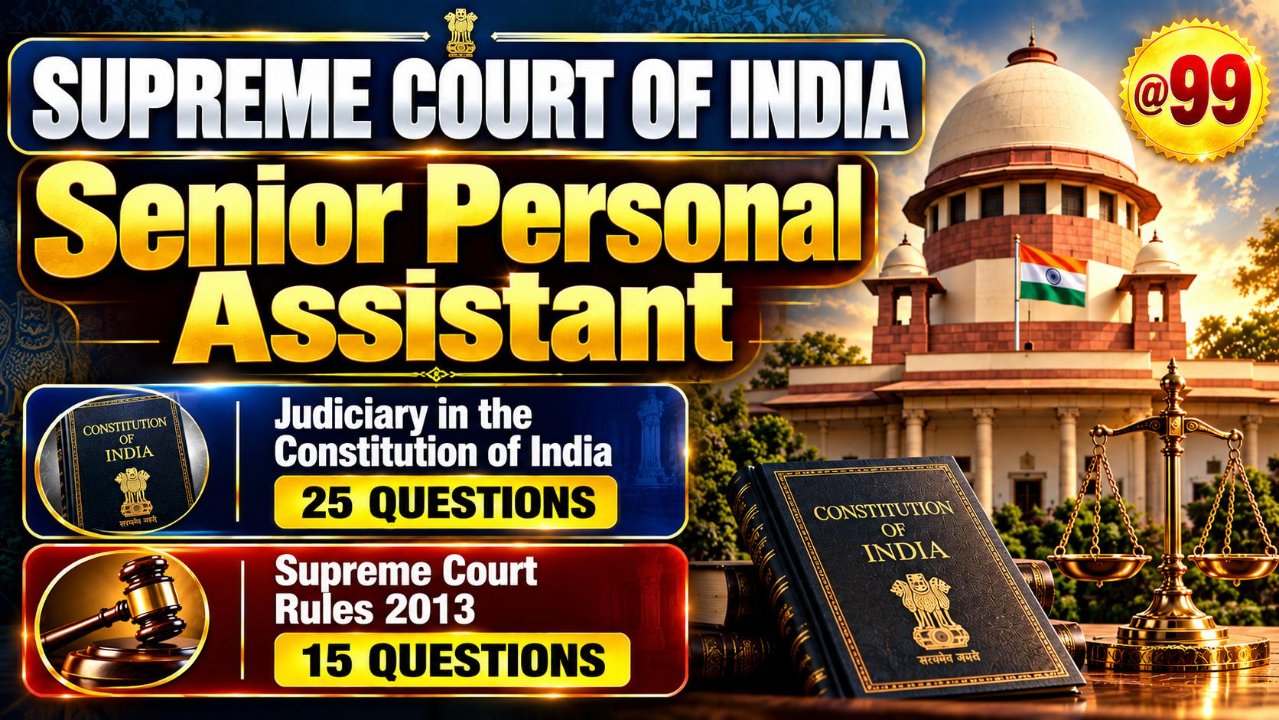
Preparing for the Supreme Court of India Senior Personal Assistant examination requires a structured study plan and dedicated practice of core legal topics. Candidates aspiring for this prestigious role must ensure that their revision is both precise and aligned with crucial statutory concepts. If you are currently working on your Supreme Court SPA 2026 preparation, understanding the structure of the Indian judiciary and specific court rules will give you an edge. In this article, we will share actionable tips on how to prepare for key legal topics and introduce a specialized online practice course designed to help you self-assess effectively.
Enroll in SPA Practice Course for ₹99
Understanding Core Topics for SCI SPA 2026
Legal provisions form a vital component of court exam preparation. For candidates preparing for the Senior Personal Assistant exam, two main areas require careful study: the Judiciary provisions under the Constitution of India and the Supreme Court Rules 2013. Having a clear grasp of these sections helps candidates answer factual and conceptual questions with greater accuracy.
Judiciary in the Constitution of India
The constitutional framework governing the Indian judicial system is spread across several critical articles. Aspirants should focus on two primary sections during their study sessions:
- Articles 124 to 146: These provisions cover the establishment, constitution, jurisdiction, powers, and procedural aspects of the Supreme Court of India. Understanding the appointment of judges, original and appellate jurisdiction, rulemaking powers, and administrative independence is essential.
- Articles 214 to 237: These articles deal with the High Courts and Subordinate Courts in Indian states. A general overview of their constitution, jurisdiction, control over subordinate courts, and appointment mechanisms helps build a complete picture of the judicial system.
Supreme Court Rules 2013
Apart from constitutional articles, familiarity with the Supreme Court Rules 2013 is equally important. These rules regulate the practice and procedure of the apex court. Understanding key provisions, definitions, filing procedures, and court protocols ensures that you are well-prepared for questions focused on court administration and procedural knowledge.
Effective Strategy for Supreme Court SPA 2026 Preparation
A systematic study strategy makes a substantial difference in high-stakes examinations. Here are practical strategies you can apply during your preparation phase:
1. Study directly from Statutory Texts and Constitutional Articles
Begin by reading the bare text of Articles 124 to 146 and Articles 214 to 237. Pay attention to important clauses, executive powers, and statutory exceptions. Making short bullet-point notes helps in quick revision before the examination.
2. Focus on Procedural Rules
Read the essential provisions of the Supreme Court Rules 2013. Highlight definitions, order structures, and operational procedures that are frequently cited in court operations. Breaking down complex rules into simple statements will improve retention.
3. Emphasize Regular Self-Assessment
Reading theory alone is rarely sufficient. Testing your knowledge through practice questions allows you to identify weak spots, assess speed, and avoid silly mistakes during the actual test. Multiple-choice practice questions train your brain to retrieve legal facts quickly.
4. Maintain Consistency and Revision Schedules
Set aside daily time slots specifically for legal topics. Regular revision ensures that article numbers and procedural guidelines remain fresh in your memory as you approach the exam.
What Is Included in the Practice Course?
To support your revision, Selection Lab has created a topic-wise practice course tailored specifically for the Supreme Court SPA 2026 recruitment syllabus requirements. This course provides structured practice questions for quick revision and self-assessment.
Here is what the course includes:
- Judiciary in the Constitution of India: 25 targeted practice questions focusing on important constitutional provisions, including Articles 124-146 and Articles 214-237.
- Supreme Court Rules 2013: 15 specialized practice questions based on key provisions and practical rules relevant to the Supreme Court.
- Total Question Bank: 40 topic-wise practice questions crafted for focused preparation.
- Affordable Access: Available at a special price of ₹99 (original price ₹299).
- Extended Validity: Enjoy full access to the practice content for 180 days.
This self-paced module helps candidates test their grasp of important articles and rules in a short period, making it ideal for revision.
Official Notifications and Examination Guidelines
Candidates are strongly advised to consult the official notification issued by the Supreme Court of India for authoritative information regarding exam schedules, total vacancy details, application fees, age limits, educational qualifications, selection procedures, pay scales, and complete syllabus instructions. Do not rely on unverified external sources for administrative details, and always cross-check guidelines from the official judicial portal.
Conclusion
Consistent revision and targeted question practice are key to tackling legal questions confidently in court examinations. By mastering constitutional articles related to the judiciary and understanding the Supreme Court Rules 2013, you build a strong foundation for the Senior Personal Assistant exam. Use structured practice sets to evaluate your progress and refine your test-taking technique.
Frequently Asked Questions
What is the price and validity of the Supreme Court SPA practice course?
How many practice questions are included in the course?
Which constitutional topics are covered in the course content?
Where can I find official exam dates, age limits, and eligibility criteria?
Try our free mock tests on the real exam interface.